How to play
Basics
Sail down the Nile, stop by stop. At each one, match amulets to turn the stone floor to gold before your moves run out.
The pieces
 An amulet.
The pieces you swap. Line up three or more of a kind to match them. Bare stone.
One match on top of it gilds it. Thick stone needs two.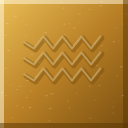 Gilded.
Done. Gild the whole floor to win the stop.
How a stop works
- Swap two neighbouring amulets to line up three or more of a kind.
- Every match gilds the stone beneath it. The bar by the board shows how far you are.
- Bigger matches make special amulets that clear more at once (see Specials).
- Stars: finish with moves to spare. Three stars need about a third of your moves left.
When it goes wrong
- Each failure at the same stop gives two more moves next try (up to six).
- A second failure in a row also brings a boon.
- Just short? You can buy three more moves on the spot.
Gold, lapis and looks
- Gilding stones earns gold; special amulets and trials earn lapis.
- Spend them on lasting upgrades at the Treasury and one-time help at Anubis’s stall.
- Customise (the palette button) holds amulet sets, floors, frames and sparkles. Most are earned by playing and a few are bought there. They change only the look.
Controls and sound
- Touch or mouse: tap an amulet, then its neighbour; or drag it.
- Keyboard: arrow keys to move, Enter to pick up, then an arrow to swap.
- Menu (☰) holds every other screen: the map, sound and music, difficulty, saving your progress and Learning pace.
- The music is composed as you play, in each stop’s own key: quicker as moves run low, brighter as the floor turns gold.
Amulets
Every amulet in the game with what the symbol meant. The stops where it appears are listed under each.
- Ankh
The sign of life, held out by Gods in countless temple reliefs.
Memphis, Saqqara, Giza, Faiyum, Abydos, Karnak, Deir el-Bahari, Abu Simbel  Scarab
Khepri, the beetle who rolls the sun up into the sky each dawn.
Memphis, Saqqara, Giza, Karnak, Abu Simbel Eye of Horus
The wedjat, a sign of protection, healing and things made whole again.
Memphis, Saqqara, Giza, Amarna, Deir el-Bahari, Abu Simbel, Alexandria Lotus
It closes at night and opens with the sun, a sign of rebirth.
Memphis, Faiyum, Amarna, Deir el-Bahari, Valley of the Kings, Abu Simbel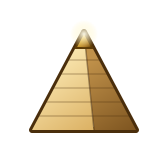 Pyramid
A royal tomb shaped like the first mound that rose from the waters of creation.
Memphis, Saqqara, Giza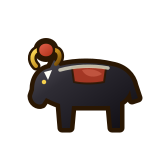 Apis bull
The Apis of Memphis was a living bull, honoured as the herald of Ptah. When one died it was buried with great ceremony in the Serapeum at Saqqara.
Memphis, Saqqara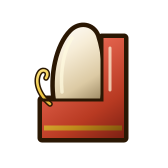 Double crown
The double crown joined the white crown of Upper Egypt and the red crown of Lower Egypt. Memphis was founded where the two lands meet.
Memphis, Abu Simbel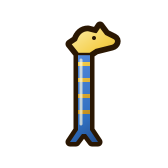 Was sceptre
The was sceptre, a staff with an animal's head and a forked foot, stood for power. Gods hold it in countless carvings.
Memphis, Saqqara, Karnak, Abu Simbel Djed pillar
Said to be the backbone of Osiris and a sign of stability and endurance.
Memphis, Saqqara, Abydos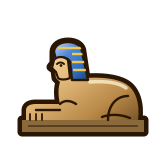 Sphinx
A lion with a king's head. The Great Sphinx at Giza, carved from the living rock, is thought to show King Khafre.
Memphis, Giza, Deir el-Bahari Bee
The bee was a sign of Lower Egypt and the king's title “He of the Sedge and the Bee” named him ruler of both lands. Bees were kept in pottery hives and honey was prized.
Memphis Papyrus
The reed of the marshes and the emblem of Lower Egypt.
Memphis, Amarna, Philae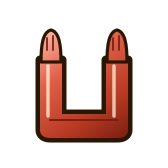 Ka
The ka was a person's life force, which lived on after death and was fed by offerings. It was written as two arms raised from the elbows.
Memphis, Saqqara, Giza, Karnak, Philae Nefer
The sign nefer meant “good” and “beautiful”, as in the name Nefertiti. It is thought to show a heart and windpipe.
Memphis, Giza, Amarna, Abydos, Valley of the Kings, Abu Simbel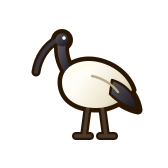 Ibis
The sacred ibis waded in marshes and lakes. It was the bird of Thoth, the God of writing. Many thousands were mummified in His honour.
Saqqara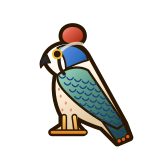 Horus
Horus, the falcon God of the sky and of kingship. Every living king was seen as Horus on earth.
Saqqara, Giza, Deir el-Bahari, Philae, Abu Simbel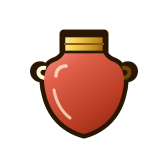 Heart
The heart, ib, was the seat of thought and feeling. At the judgement of the dead it was weighed against the feather of Ma’at and heart amulets were laid on mummies.
Saqqara, Giza, Amarna, Abydos, Deir el-Bahari, Valley of the Kings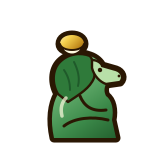 Baboon of Thoth
Thoth, God of writing and of the moon, could take the form of a baboon as well as an ibis. Baboons chatter at sunrise and the Egyptians carved them greeting the sun.
Saqqara, Karnak, Abu Simbel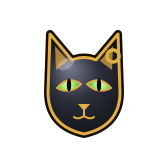 Cat of Bastet
Bastet, gentle protector of homes and of mothers and children.
Saqqara, Giza, Faiyum, Amarna, Deir el-Bahari, Philae, Alexandria Shen ring
The shen ring, a loop of rope tied with no end, stood for eternity and protection. Drawn out long, it became the cartouche round a king's name.
Saqqara, Giza, Faiyum, Karnak, Deir el-Bahari, Abu Simbel Sacred barque
A God's statue travelled in a barque, hidden in its shrine, carried on the shoulders of priests or sailed on the river at festivals.
Giza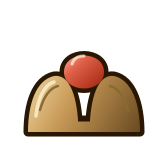 Horizon
The akhet, the horizon, shows the sun between two hills, where it is reborn each morning. The Great Sphinx was called Horemakhet, “Horus in the horizon”.
Giza, Valley of the Kings, Abu Simbel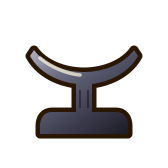 Headrest
The Egyptians slept with their heads on headrests of wood or stone. Small headrest amulets were laid with the dead to protect the head.
Giza, Valley of the Kings Crocodile of Sobek
Sobek, God of the Nile’s waters and of raw, fearsome strength.
Faiyum Blue lotus
The sacred water lily of the Nile, linked with the sun God.
Faiyum, Philae Nile fish
The tilapia seemed to be reborn from its own mouth. Thus it was a sign of renewal.
Faiyum, Philae, Alexandria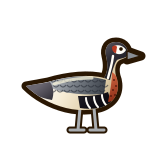 Meidum goose
The Meidum Geese, painted about 2600 BCE in the tomb of Nefermaat and Itet at Meidum, near the Faiyum, are among the oldest and most admired paintings from Egypt.
Faiyum Frog
Frogs came in their thousands with the flood and stood for new life. Heqet, a frog Goddess, was said to help at births.
Faiyum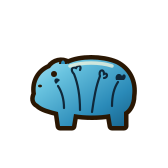 Faience hippo
Blue faience hippopotamuses, painted with the plants of the marsh, were placed in Middle Kingdom tombs. Taweret, a hippo Goddess, protected mothers and children.
Faiyum, Philae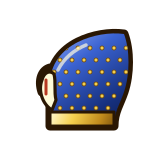 Blue crown
The blue crown, the khepresh, worn by the kings of the New Kingdom. Akhenaten is often shown wearing it.
Amarna, Abu Simbel The Aten
The sun disk, its rays ending in hands, worshipped under Akhenaten.
Amarna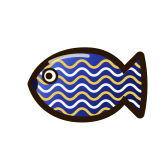 Glass fish
A small bottle for scented oil, made at Amarna in the shape of a tilapia from dark blue glass with trails of yellow and white. Glass was a new and precious craft in Akhenaten's time.
Amarna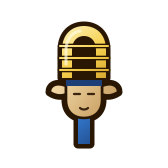 Sistrum
The sistrum was a rattle shaken in the worship of Hathor, often with Her face on the handle. Its sound was thought to please the Gods.
Amarna, Deir el-Bahari, Philae Grapes
 were grown to eat and to make wine, in the gardens of the Nile valley and in the oases of the Western Desert.
Amarna, Alexandria Knot of Isis
The tyet, an amulet of the Goddess Isis, usually cut from red stone.
Abydos, Philae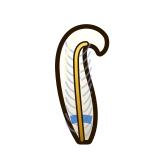 Feather of Ma’at
Truth and cosmic order; in the afterlife the heart was weighed against it.
Abydos, Deir el-Bahari, Valley of the Kings, Philae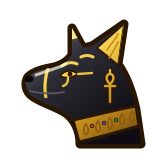 Anubis
The jackal-headed God of embalming, who guarded tombs and guided the dead.
Abydos, Deir el-Bahari, Valley of the Kings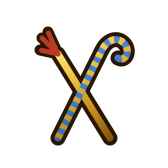 Crook and flail
The crook and flail were held by Osiris and by kings. The shepherd's crook stood for the ruler's care of the people.
Abydos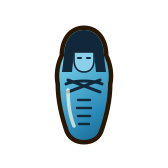 Shabti
s were small figures placed in the tomb to do the owner's work in the next world. Some tombs held hundreds, one for each day of the year.
Abydos, Valley of the Kings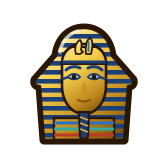 Mask of Tutankhamun
The gold mask laid over the head of Tutankhamun’s mummy, inlaid with blue glass and stones. Howard Carter’s team found it in the king’s tomb in the Valley of the Kings in 1925.
Abydos, Valley of the Kings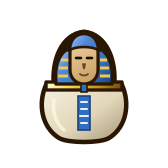 Jar of Imsety
A canopic jar with the head of Imsety, the human-headed son of Horus, who guarded the liver taken out during embalming.
Abydos, Valley of the Kings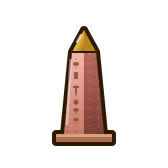 Obelisk
A single needle of granite whose tip was meant to catch the first light.
Karnak, Deir el-Bahari, Abu Simbel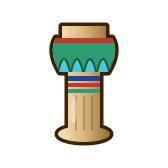 Papyrus column
Stone carved to look like a bundle of reeds, as in Karnak’s great hall.
Karnak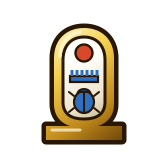 Cartouche
The oval loop of rope that encloses a royal name. This one holds the throne name of Thutmose III, Men-kheper-Ra.
Karnak, Abu Simbel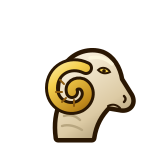 Ram of Amun
The ram was sacred to Amun of Thebes. An avenue of ram-headed sphinxes leads to His temple at Karnak.
Karnak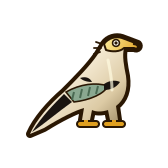 Vulture
s were sacred to Nekhbet (the Goddess of Upper Egypt) and to Mut (the mother Goddess of Thebes). The Egyptian vulture, white with a yellow face, is also one of the commonest hieroglyphs.
Karnak, Valley of the Kings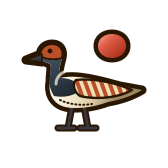 Son of Ra
“Son of Ra”, written with a pintail duck (sa, “son”) and the sun's disc. From the Fourth Dynasty on, kings wrote this title before their birth name.
Karnak, Abu Simbel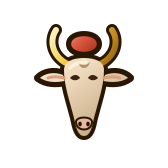 Hathor
, Goddess of love, music and joy, was shown as a cow, or as a woman with cow's ears, the sun's disc between Her horns.
Deir el-Bahari, Philae Myrrh tree
Hatshepsut sent ships to the land of Punt for incense. The walls of her temple at Deir el-Bahari show myrrh trees carried home in baskets to be planted.
Deir el-Bahari Tomb star
The five-pointed stars painted across the ceilings of tombs and temples.
Valley of the Kings Throne of Isis
Isis's name, Aset, is written with the sign of a seat. She wears it on Her head. Her temple at Philae was among the last to keep the old worship.
Philae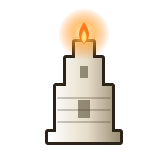 The Pharos
The great lighthouse of Alexandria, one of the Seven Wonders.
Alexandria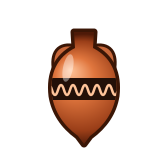 Amphora
A Greek storage jar for wine and oil, common in Ptolemaic Alexandria.
Alexandria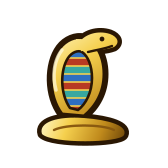 Uraeus
The rearing cobra worn on the brow of kings and queens.
Alexandria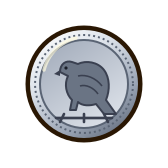 Ptolemaic coin
Silver coins of the Ptolemies, the Greek kings who ruled Egypt from Alexandria, showed an eagle standing on a thunderbolt.
Alexandria Papyrus roll
Books were rolls of papyrus, written in black ink with red for the headings. The Library of Alexandria set out to gather every book in the world and may have held hundreds of thousands.
Alexandria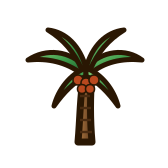 Date palm
The date palm fed the oases and shaded their gardens. Its fruit was dried and stored and its fibres were twisted into rope.
Alexandria Pomegranate
Brought to Egypt in the New Kingdom, the pomegranate grew in gardens and its shape was copied in vessels of faience, glass and silver.
Alexandria
Specials
Special amulets are made by bigger matches. Match a special again to set it off.

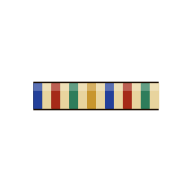
 Banded amulet
Match four in a row. When matched, it clears its whole row, or its whole column if the band runs up and down.
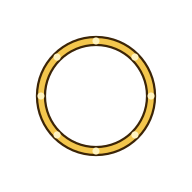 Ringed amulet
Match in an L or a T shape. When matched, it clears the nine squares around it.
 Star of Sopdet
Match in an L or T shape where one arm is four long. When matched, it clears both diagonals through its square. Sopdet was the star Sirius, whose rising at dawn announced the Nile flood.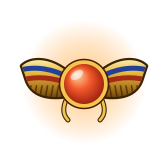 Winged sun
Match five in a row. Swap it with any amulet to clear every amulet of that kind. Two winged suns swapped together clear the whole board.- Combining specials
Swap two specials with each other to set both off at once, even without a match.
Badges
Now and then an amulet falls wearing a small badge. Match it like any other amulet to use its power. At most two good badges are on the board at once.
 Blessing of Khepri (gold sparkle)
Golden light flies out and gilds four bare stones anywhere on the floor. Water clock (blue hourglass)
Gives you three extra moves. Strike of Horus (red cross)
Clears the whole row and the whole column it sits in. Bloom of Nefertem (pink lotus, uncommon)
Gilds the stones in the nine squares around it. Nefertem was the God of the lotus blossom. Gem of the east (blue gem, rare)
Three lapis, straight into your purse. Real lapis lazuli reached Egypt by trade from the mountains of Badakhshan, far to the east.
Cursed badges wear a red ring. They are rare and never appear on Relaxed. Whatever clears them sets them off, a cascade included.
 Coils of Apep (red serpent)
Apep, the serpent of chaos, bites: you lose two moves. He never takes your last one. Sandstorm of Set (whirl of sand)
Sand buries three gilded stones: they turn bare again and must be gilded anew.
Boons
Boons are yours to keep until you use them, from stop to stop. They sit under the board; tap one to use it. Some ask you to choose a square first: the board glows gold while it waits.
- Flood of the Nile
Gilds eight bare stones at once. - Hammer of Set
Shatters a five by five square you choose. - Wisdom of Thoth
Grants six extra moves. - Scales of Anubis
Anubis weighs the floor: every thick, cracked stone loses a layer. - Chisel of Ptah
Shatters one amulet you choose and gilds the stone under it. - Scribe’s band
Turns any amulet you touch into a banded amulet. - Boon of Ra
Turns any amulet you touch into the winged sun. - Cord of Seshat
Stretches the measuring cord across the row you choose: every stone in it loses a layer. - Fury of Sekhmet
Three amulets on the board become ringed amulets. - Dance of Bes
Bes dances the amulets into a new order and gives you two extra moves.
Trials pay out the great boons. The chisel, the scribe’s band and the Dance of Bes are sold at Anubis’s stall and so are some of the great ones.
Floors
- Bare stone
Needs one match on top of it to be gilded. 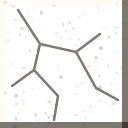 Thick stone
Cracked and dark. Needs two matches: the first cracks it to bare stone, the second gilds it. The Scales of Anubis strip a layer from all of them at once.- Gilded
Done. Matches here still score, but do not count towards the floor.
- Classic (8 × 8). Each stop’s own floor plan. Quick stops.
- Grand (10 × 10). The same shapes, larger: longer cascades, more moves.
- Omega (fills the screen). As large as the screen, often split by the Nile. Pays half the gold and lapis.
- Ruins (12 × 12). A broken temple floor with a jagged edge. The biggest of all.
The shapes a stop can take: its own temple floor, the ankh, diamond court, crossing halls, coils of the serpent, twin pools, eye of horus, the obelisk, the stairway, the oasis.
Trials & curses
When you arrive at a stop, a priest often offers two trials. Finish one during the stop and you keep its boon. If you fail it or leave the stop without finishing it, you carry a curse to the next stop.
Curses grow harsher on Hard and Pharaoh. Each trial card tells you its curse before you accept.
Every trial
- Clear 14 of one amulet: Flood of the Nile
- Make 4 special amulets: Boon of Ra
- Set off a cascade of four: Hammer of Set
- Gild nine stones in one move: Flood of the Nile
- Clear ten squares in a single move: Scales of Anubis
- Finish with eight moves to spare: Wisdom of Thoth
- Forge a winged sun: Hammer of Set
- Make three banded amulets: Cord of Seshat
- Crack eight thick stones: Scales of Anubis
- Gild half the floor within ten moves: Wisdom of Thoth
- Finish the stop without using a boon: Boon of Ra
- Swap two special amulets together: Fury of Sekhmet
- Set off a cascade 6 deep: Wisdom of Thoth
River events
Sometimes, sailing on from a stop you have won, something happens on the river. Some events are short puzzles on a small board with their own goal; others are a choice. Failing a puzzle costs nothing but its reward and you can always sail on past.
- Aground on a sandbank. Gild a small floor in 20 moves. Reward: 45 gold.
- Crocodiles in the reeds. Clear 15 crocodiles in 13 moves. Reward: Hammer of Set.
- A tomb robber’s cache. Score 8,000 points in 9 moves. Reward: 8 lapis.
- The priest’s riddle. Gild a small floor in 14 moves. Reward: Scales of Anubis.
- A night crossing. Gild a small floor in 22 moves, by the light of a single lamp. Reward: 60 gold and 4 lapis.
- The market at Thebes. A choice.
- An oracle by the water. A choice.
- A shrine of Bes. A choice.
- The old ferryman. A choice.
- The lioness’s temple. Gild a small floor in 18 moves. Reward: Fury of Sekhmet.
- Lost in the papyrus. Clear 16 papyrus stems in 14 moves. Reward: 60 gold.
Completing river events counts towards the Boatman’s oar relic, the sistrum of Hathor relic, the nilometer relic, the sounding pole relic, lapis pavement, cedar deck, ivory and silver, white and turquoise.
Tombs & oases
Beside nine of the stops lies a place you can visit: a tomb, a temple or an oasis. Its way opens once you gild that stop. Look for a doorway or a palm beside the stop on the map, on the stop’s card, or on the scroll when you win it.
 Buried in sand
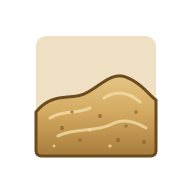
This amulet can’t be moved and it is in no match. Make a match right beside it or blast it with a special to brush the sand off. From then on it is an ordinary amulet and the stone under it is gilded when you match it.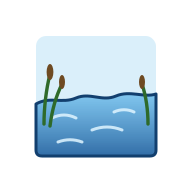 Under water
The same in an oasis: the amulet can’t be moved until a match beside it lifts it out of the water.
Tombs and temples
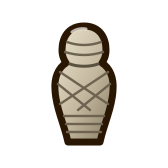
Dim and lit by torches, with amulets of their own: mummies, canopic jars, broad collars, cracked jars and torches. Some amulets lie buried in sand.
- The Serapeum
Beside Saqqara. The first time: 15 lapis; going back: 15 lapis. - The Grand Gallery
Beside Giza. The first time: 150 gold; going back: 150 gold. - The Osireion
Beside Abydos. The first time: Flood of the Nile; going back: 75 gold. - The Great Hypostyle Hall
Beside Karnak. The first time: 20 lapis; going back: 20 lapis. - The tomb of Tutankhamun
Beside Valley of the Kings. The first time: 250 gold; going back: 250 gold. - The sanctuary of Abu Simbel
Beside Abu Simbel. The first time: 25 lapis; going back: 25 lapis.
Oases
In daylight among date palms, with the amulets of the oases: date palms, pomegranates, grapes and the sacred ibis. Some amulets lie under water.
- The lake of the Faiyum
Beside Faiyum. The first time: 15 lapis; going back: 7 lapis. - The oasis of Kharga
Beside Deir el-Bahari. The first time: 200 gold; going back: 100 gold. - The oasis of Siwa
Beside Alexandria. The first time: 25 lapis; going back: 12 lapis.
Each place pays its reward the first time you gild its floor and another every time you go back (from the map, or the stop's card). A tomb or temple stirs each time you return: cursed badges turn up, more with every visit. The reward grows with them. Oases stay calm and pay a smaller, steady reward.
Relics
Relics are lasting rewards for deeds along the river. Find one and it is yours for every journey; some also pay out gold, lapis or a boon the moment you do. Undiscovered relics show only their purpose.
- Scribe’s palette
Gild your first floor. - Falling waters
Set off a cascade of five. - Priest’s seal
Finish five trials. - Mason’s plumb
Earn three stars at ten stops on one journey. - Disk of Ra
Forge eight winged suns. - Swift sandals
Win a stop with twenty moves to spare. - Crook and flail
Win any stop on Pharaoh. - Golden barque
Reach Alexandria and gild it. - Collar of Anubis
Gild a whole floor on Hard or Pharaoh without spending a single boon. - Boatman’s oar
Complete five river events. - Sandals of Bes
Win five stops in a row, without failing one in between. + Wisdom of Thoth - The great flood
Gild an Omega board, the whole screen at once. + 500 gold - The scribe’s catalogue
Find twelve relics for the museum. + 30 lapis - The royal granary
Earn ten thousand gold in all. + Flood of the Nile - The treasury chest
Hold a thousand lapis at once. + 400 gold - The mason’s chisel
Crack a hundred and fifty thick stones. + 250 gold - The double chord
Set off two special amulets at once. + 25 lapis - The cataract
Set off a cascade of twelve. + 300 gold - The djed pillar
Win a stop after failing it five times. + Hammer of Set - The offering table
Finish twenty-five trials. + 20 lapis - The surveyor’s cord
Crack six hundred thick stones. + Cord of Seshat - The sistrum of Hathor
Meet twelve river events. + 150 gold - The sun disk of Sekhmet
Forge thirty winged suns. + Fury of Sekhmet - The sealer’s signet
Stamp every seal on the journey. + 40 lapis - The ivory wand
Win a stop with three omens braved. + 200 gold - The shabti
Gild fifty stops. + 25 lapis - The heart scarab
Win ten stops on Hard or Pharaoh. + Wisdom of Thoth - The water clock
Win a stop with twenty-five moves to spare. + 200 gold - The senet board
Win eight stops in a row, without failing one in between. + 20 lapis - The nilometer
Meet twenty-five river events. + 300 gold - The deben weight
Hold three thousand gold at once. + 30 lapis - The pyramidion
Forge three winged suns at one stop. + 150 gold - The menat necklace
Make twelve special amulets at one stop. + 15 lapis - The golden flies of valour
Win a stop with all five omens braved. + 600 gold - The canopic jar
Set out on a third journey down the Nile. + Flood of the Nile - The mathematical papyrus
Finish fifty trials. + 30 lapis - The blue crown
Gild Alexandria on Pharaoh. + 50 lapis - The golden shrine
Find thirty relics for the museum. + 800 gold - The workmen’s lamp
Explore a tomb or temple chamber. + 10 lapis - The tomb plan
Explore six tombs, temples or oases. + 400 gold - The calendar of lucky days
Brave fifteen omens in all. + 30 lapis - The was sceptre
Make a cascade of fifteen in a stop and win it. + 300 gold - The necropolis seal
Explore every tomb, temple and oasis. + 40 lapis - The gold of honour
Win twenty-five stops on Hard or Pharaoh. + 500 gold - The incense of Punt
Earn forty thousand gold. + 50 lapis - The sounding pole
Meet forty river events. + 300 gold
Seals & omens
Seals. Every stop has three seals: small challenges, stamped the first time you win there and meet one. Each is worth 4 lapis and seals open new looks. Pick a stop on the map to see its seals; the list of stops under the map shows them as small wax seals.
Omens. Once a stop is gilded, you may brave omens before setting out there again. Each omen makes the stop harder and adds a third more gold and lapis to the win. The most you have braved at each stop is shown in the list of stops under the map. Omens last for that stop and its restarts; sailing on clears them.
- The short road: A fifth fewer moves.
- Weight of stone: One bare stone in six starts thick.
- Dimmed amulets: No badged amulets fall.
- Chaos stirs: Cursed badges fall, six times as often.
- The Gods are silent: No boons can be used.
Treasury & stall
Gilding stones earns gold. Making special amulets and finishing trials earns lapis.
The treasury (chest button) sells lasting upgrades: Mason’s favour, Lucky sands, Ear of the priest, Temple granary, Scribes of the house of life. Your relics, 46 rewards for deeds along the river, are kept in the museum (Menu, or the relics counter at the top).
Customise (palette button) is where the looks live: amulet sets, floor sets, board frames and sparkle colours. Most are earned by playing and a few are for sale there, for gold or lapis. None of them changes anything but the look. Sound, vibration, colours and motion are in Menu → Settings.
Anubis’s stall (jackal button) sells one-time help: three more breaths, bread and beer, shifting sands, dance of bes, chisel of ptah, scribe’s band, cord of seshat, fury of sekhmet, priest’s chest, second wind. Buying the same thing twice at one stop costs a little more each time.